How is Zeffy free?

How is Zeffy free?
Zeffy relies entirely on optional contributions from donors. At the payment confirmation step - we ask donors to leave an optional contribution to Zeffy.
Learn more >
For a small nonprofit without an in-house designer, Canva for Nonprofits is one of the highest-ROI free tools you can apply for today. It unlocks Canva Pro at no cost for qualifying 501(c)(3) organizations, which means premium templates, a brand kit, team collaboration for up to 50 users, and access to Canva's full premium content library.
This guide walks through exactly how to qualify, what documents to gather, how to submit your application, and the features that actually matter in your first month. Then we close the loop on something Canva does not solve: turning the designs you make into dollars your nonprofit keeps 100% of.
Canva for Nonprofits is open to registered charitable organizations whose mission is to advance a public benefit, not generate private profit. In the United States, that almost always means you need active 501(c)(3) status with the IRS.
Use this quick checklist to see if you qualify:
If you are still in the formation stage and have not yet been recognized by the IRS, you will need to wait until your determination letter arrives before you can apply. New to the process? Start with this primer on how to start a nonprofit.
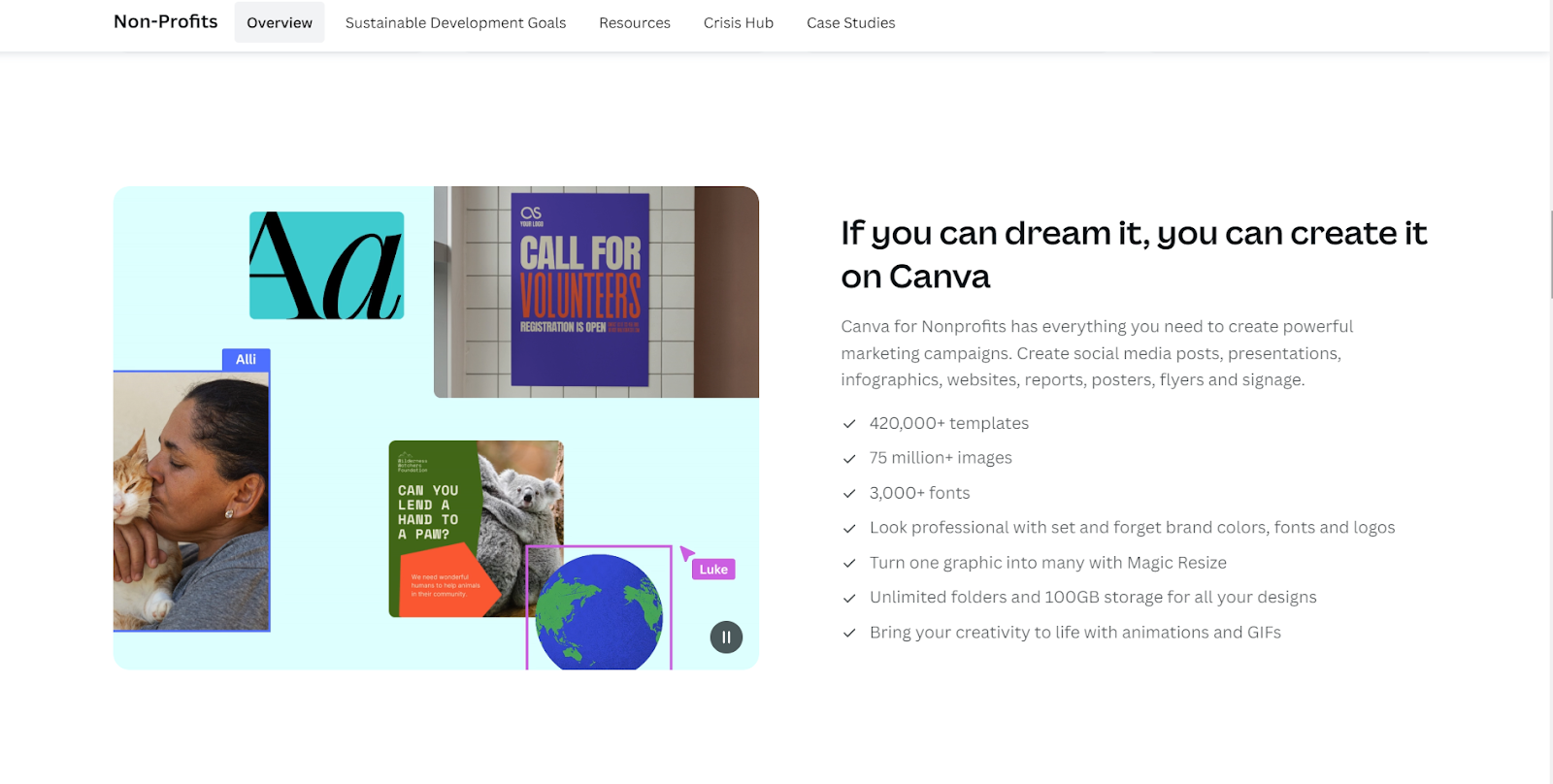
The application itself is quick. The slowest part is usually getting your documents in order before you start.
Tips for faster approval:
What Canva asks for depends on your organization type and country. Here is the most common breakdown:
If a document is in a language other than English, Canva may ask for a translated copy. Check Canva's current eligibility guidelines for the exact requirements in your country before submitting.
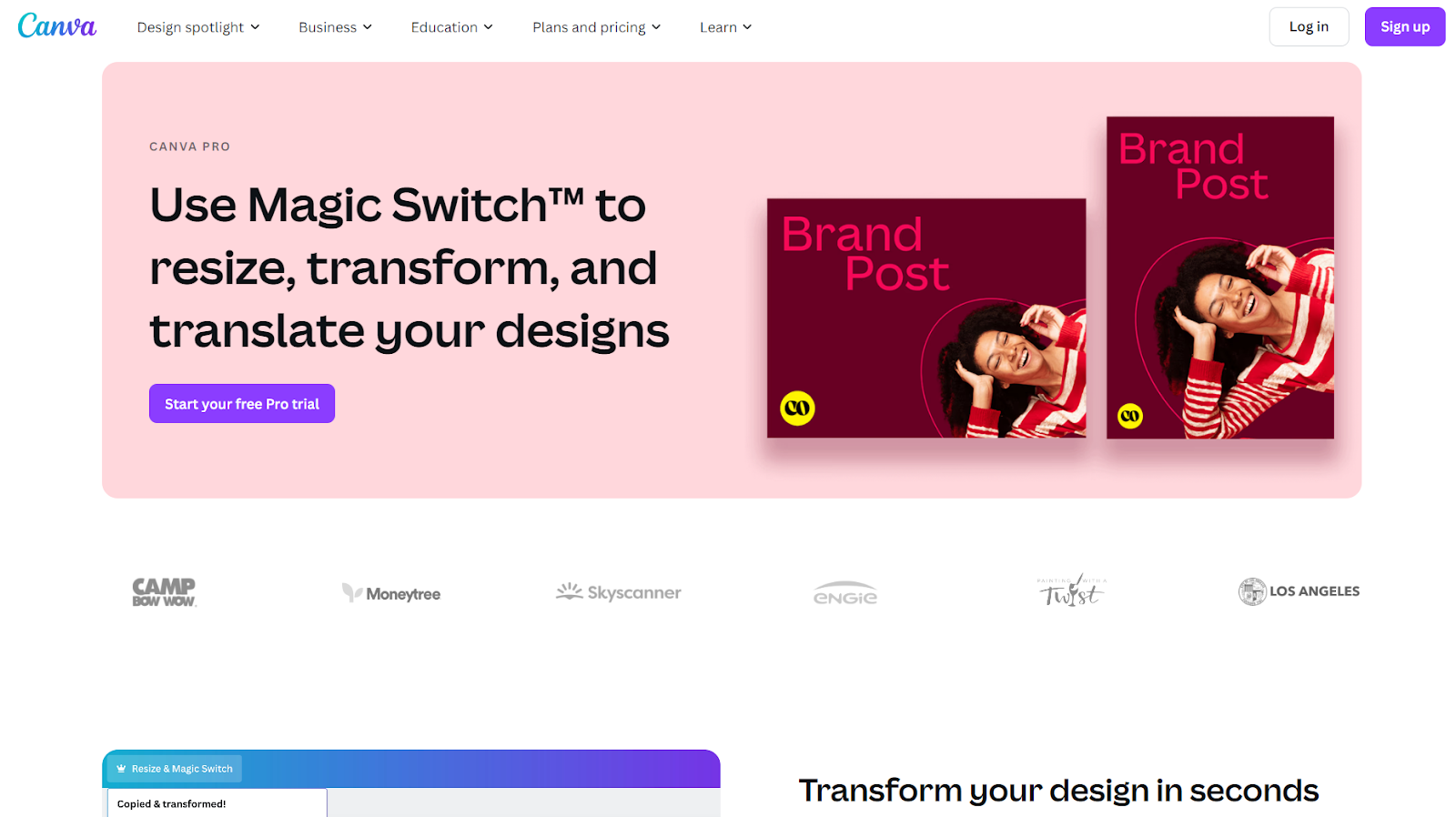
Once approved, your account gets nearly all of Canva Pro's premium capabilities at no cost. Here is what is actually inside, organized by what you will use it for.
The Brand Kit is the single most useful feature for a nonprofit with rotating volunteers and limited design oversight. Set it up once and every design starts on brand.
Once the kit is live, document a simple style guide inside Canva so the rest of your team knows which template to grab for which channel.
Designs only matter when they drive action. Here are the five highest-leverage use cases for small nonprofits, each paired with the free fundraising surface the design should point to.
Instagram carousels, Facebook posts, and LinkedIn updates announcing a campaign, sharing impact numbers, or asking for gifts. Canva's templates and Magic Switch make it fast to produce a full campaign set in an afternoon.
The catch: a great Instagram post is wasted if the link in your bio drops donors onto a fee-charging platform. Pair every fundraising graphic with free, customizable donation forms so the dollars the design raises actually reach your program. For tactics on what to post and when, see Zeffy's guide to social media for nonprofits.
Galas, 5Ks, auctions, community dinners, volunteer days. Canva's print-ready templates plus its QR code generator let you produce flyers that send scanners straight to a registration page.
Canva's presentation and report templates turn dry program numbers into visuals donors actually read. Build an annual report or a quarterly impact infographic without paying a designer.
A consistent, branded newsletter header builds recognition in the inbox. Design it once in Canva, drop it into the top of every send, and let your messaging do the rest.
Recruitment flyers, peer-to-peer campaign launch kits, sign-up sheets, and digital toolkits volunteers can share themselves. Build a volunteer-facing template set in Canva and give each volunteer a personalized version they can post.
Canva offers three tiers. Here is how they line up:
| Tier | Price | Team seats | Premium content | Brand Kit |
|---|---|---|---|---|
| Canva Free | $0 | 1 | Limited | Not included |
| Canva Pro | $12/month or $144/year (per canva.com/pricing) | 1 | Full premium library | Included |
| Canva for Nonprofits | $0 for eligible 501(c)(3)s | Up to 50 | Full premium library | Included |
The headline: a qualifying nonprofit gets the full Canva Pro feature set, but with up to 50 users instead of one and at a price of $0 instead of $144/year. That is over $140/year in software value per organization, plus the team-collaboration upgrade.

If Canva does not fit your workflow or your application is denied, these two design tools are the most commonly considered alternatives. Both have paid premium tiers; check each provider's current nonprofit page for the latest program details, since terms change.
Adobe Express is Adobe's quick-design tool, with a large stock photo library, Adobe Fonts integration, and templates aimed at social media and marketing assets. It is the closest workflow analog to Canva for teams that already work in Adobe products.
Pricing: free tier with basic editing, plus a paid premium tier for advanced features. Free for qualifying nonprofits where available, per Adobe's nonprofit program; confirm current eligibility on Adobe's site before relying on it.
Fotor is an all-in-one photo editor and design tool with AI-assisted editing, retouching, and a template library aimed at social media and marketing graphics. It is lighter on team collaboration than Canva but strong on photo editing.
Pricing: free tier with basic features, plus paid premium tiers. Free for qualifying nonprofits where available; confirm current eligibility on Fotor's site before relying on it.
Canva for Nonprofits, Google Ad Grants, Wave's core accounting, and HubSpot's free CRM are among the rare nonprofit programs that are genuinely free. Stacking them is how a small nonprofit operates at a much bigger scale than its budget should allow.
But notice what is still missing from that stack: the moment of conversion. Most fundraising platforms skim as much as 7% off every donation in platform and processing fees. A beautifully designed Canva appeal can drive thousands of dollars in giving, only to lose hundreds of those dollars before they ever reach your program.
Zeffy closes that gap. Trusted by 100K+ nonprofits who have collectively raised $2B+ on the platform, Zeffy is 100% free for nonprofits. No platform fee, no transaction fee, no credit card fee. Ever. $100 in equals $100 out. That means the donation page behind your Canva graphic, the ticketing form behind your event flyer, the newsletter your branded header sits inside, and the peer-to-peer page your volunteer activation kit links to are all zero-fee.
Want to see what else belongs in the stack? Browse Zeffy's roundups of free nonprofit software and tools and tactics for nonprofit marketing.
Yes, the Canva for Nonprofits program offers eligible organizations all the premium features of the Pro version for free.
Canva for nonprofits ensures data security features and protects sensitive information. Here are some standard security features Canva offers:
* Encryption
* Top-tier physical security controls
* Manual and automated checks for security issues
* SSO and multifactor authentication (MFA) options for users and nonprofits to secure their accounts
* In-app permissions to administer, manage, design, or access content
Canva recommends following basic security practices to avoid any threats and breaches.
Canva for Nonprofits allows up to 50 people per eligible nonprofit to collaborate using its features. The team can get free access to the premium features to improve the nonprofit's visual communication.
The difference between Canva Pro and Canva for Nonprofits is based on pricing and eligibility. Canva Pro is a paid version offering premium features for individuals and businesses, priced at $12/month or $144/year per canva.com/pricing. Canva for Nonprofits is a special program that provides eligible 501(c)(3) organizations with access to those same premium features at no cost, plus up to 50 user seats per account.
Canva does not publish a guaranteed window. In practice, review typically takes a few business days, per Canva, though it can run longer during high-volume periods or for international applications that require additional documentation. You will receive an email when a decision is made.
Parent-Teacher Associations and similar school-affiliated groups can apply if they are registered as 501(c)(3) organizations in their own right (separate from the school). PTAs that operate under a school's tax status rather than their own typically do not qualify, since K-12 schools without a separate charitable purpose are excluded.
If your application is denied, Canva's email will usually explain why. The most common reasons are missing or mismatched documentation, an organization type that is not eligible, or a name on the application that does not match the legal name on the determination letter. You can correct the issue and reapply.
Yes. If you already have a Canva account, you can apply for Canva for Nonprofits using that same account. Once approved, your existing designs, brand assets, and team setup migrate into the nonprofit workspace.


Check out the best nonprofit website examples and best practices to make yours stand out. Learn what to include on your site, what to leave out, and creative ideas.

.webp)
Explore 37 best free software and tools for your nonprofit. From fundraising campaign management to productivity, explore our top free picks.

.webp)


