How is Zeffy free?

How is Zeffy free?
Zeffy relies entirely on optional contributions from donors. At the payment confirmation step - we ask donors to leave an optional contribution to Zeffy.
Learn more >

Verdict: Peer-to-peer fundraising turns your supporters into fundraisers. One nonprofit becomes hundreds of personal campaigns, each reaching a network you could never have accessed directly.
What works: Recruit fundraisers who already know your mission (board members, recurring donors, past event attendees). Give them templates, photos, and a clear ask. Check in mid-campaign so momentum does not stall. Measure new-donor acquisition, not just total raised.
What doesn't: Posting "anyone can sign up!" on social media and waiting. Platforms with compounding fees of 3% to 8% per transaction eat into hundreds of small gifts fast. Launching without a recruitment plan or fundraiser coaching leaves activation rates in the floor.
Best for: Small-to-mid nonprofits running a recurring event (walk/run, Giving Tuesday, birthday fundraisers, mission-specific drives) where lots of small gifts are the point.
Worth considering if: You want to acquire new donors at low cost, build a recurring annual fundraising program, or turn passive supporters into active mission ambassadors.
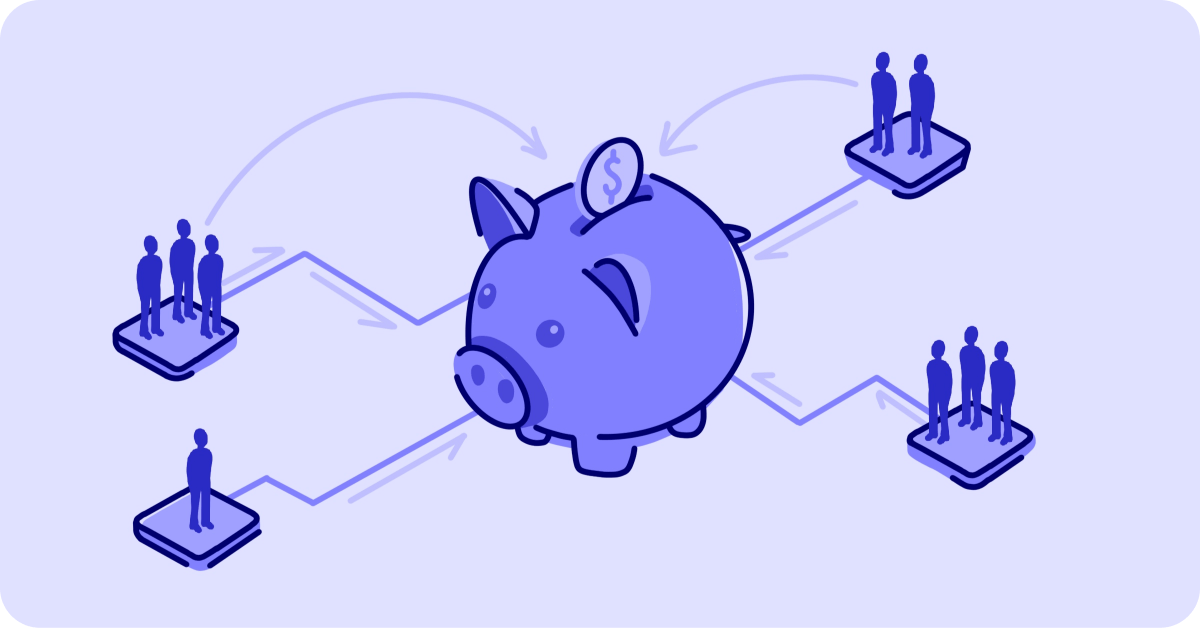
Peer-to-peer fundraising (also called P2P or social fundraising) is when individuals raise money on behalf of a nonprofit. Instead of your organization soliciting donations directly, your supporters become fundraisers. They create personal campaign pages, set their own goals, and ask their friends, family, and coworkers to give.
The mechanic is simple, and the simplicity is the point: one nonprofit turns into dozens or hundreds of fundraisers. Each fundraiser reaches a network you would not have reached on your own. The flow looks like this:
Peer-to-peer fundraising works by letting supporters raise money on behalf of your nonprofit through their own personal campaign pages, then sharing those pages with their networks. Every donation flows to the nonprofit, and the supporter gets credit for bringing it in. The platform handles page hosting, payment processing, receipting, and reporting so your team can focus on coaching fundraisers, not chasing logistics.
Underneath that, there are two perspectives worth understanding, because the mechanics on each side determine whether a campaign actually works.
A typical fundraiser outreach message reads something like: "Hey, you know I've been a volunteer at [Nonprofit] for three years. They're running a campaign this month to fund [specific program], and I'm trying to raise $500. Anything you can give helps. Here's my page: [link]." Short, personal, specific. That is the format that converts.
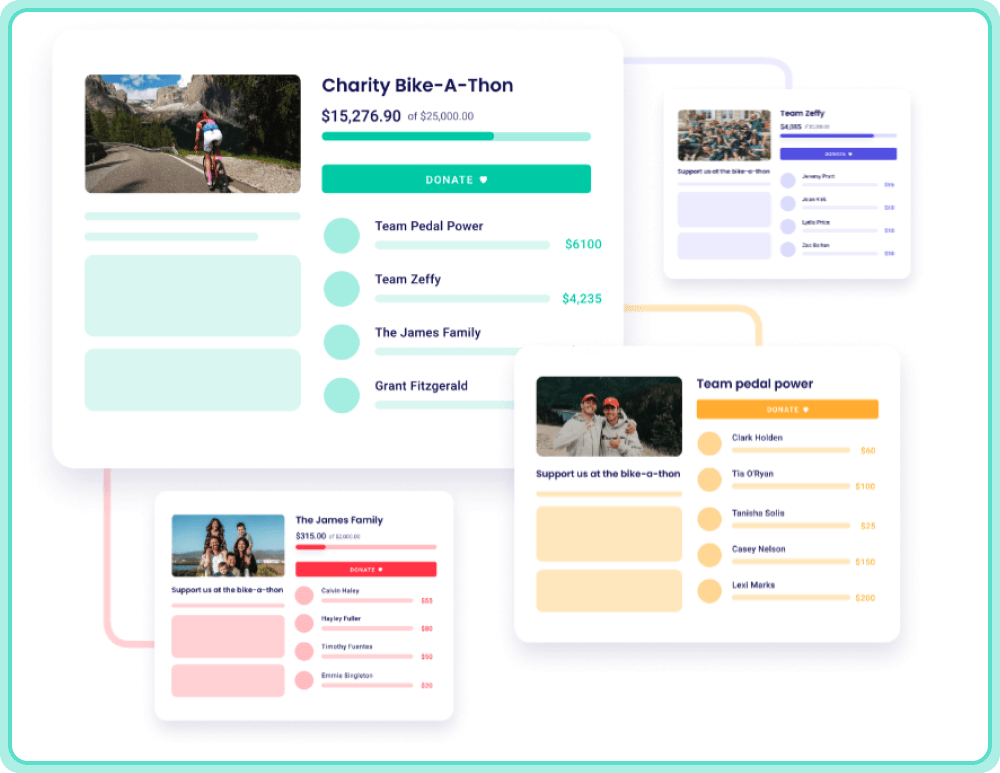
If you want a platform that ships these mechanics for nonprofits, Zeffy's free peer-to-peer campaign tool includes individual and team fundraising pages, leaderboards, donor-board messages, and reporting at no cost.
| Dimension | Peer-to-peer fundraising | Crowdfunding |
|---|---|---|
| Who raises the money | Supporters raise on behalf of a nonprofit through personal pages | One campaign owner raises directly for a project or cause |
| Page structure | One main campaign with many individual or team sub-pages | Single campaign page |
| Best for | Ongoing supporter engagement, recurring events, walks/runs | One-time project funding, emergency appeals, specific goals |
| Donor relationship | Fundraiser-to-donor (personal network) then nonprofit-to-donor | Campaign-to-donor (often a single relationship) |
| Typical duration | 4 to 8 weeks, often annual or recurring | 30 to 60 days, often one-off |
| Use case fit | Building a fundraising community over time | Funding a defined project with a hard deadline |
The two are not mutually exclusive. Some platforms support both formats, and some nonprofits run a crowdfunding campaign for a capital project while running P2P for their annual walk. Pick the model that matches the job: P2P for community and recurring engagement, crowdfunding for a defined one-time goal.
P2P is not one format. Here are seven ideas that work for small-to-mid nonprofits, with a note on why each works and one practical tip.
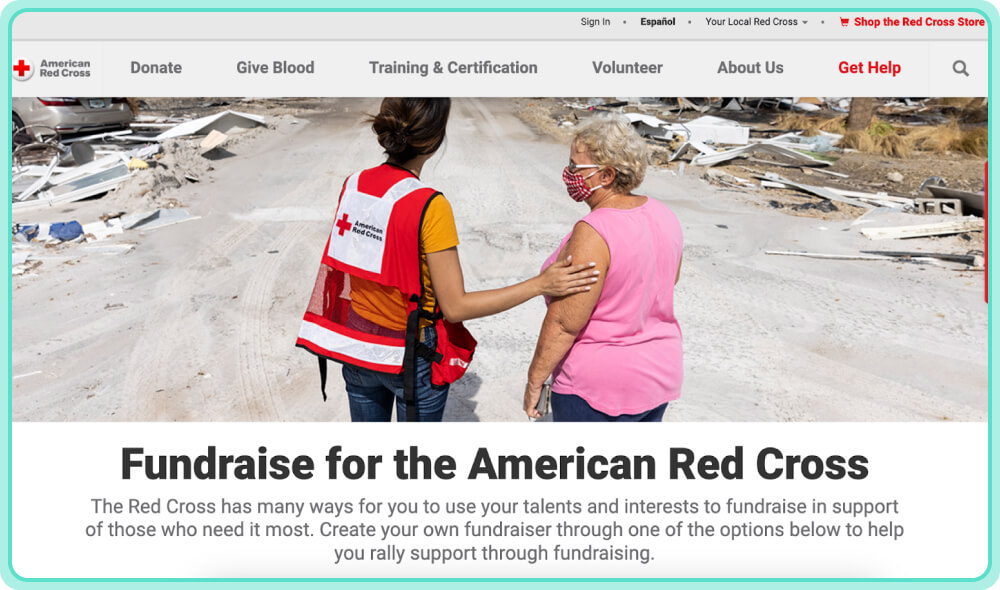
What it is: A rapid-response P2P campaign launched in the days after a humanitarian crisis. Supporters create pages to raise emergency funds for affected communities.
Why it works: Urgency drives generosity. People want to help and want to feel useful. A fundraiser page gives them a way to channel that.
Tip: Have a campaign template ready before you need it. When a crisis hits, you have hours, not weeks, to launch. The American Red Cross is one of the strongest examples of emergency P2P done at scale.
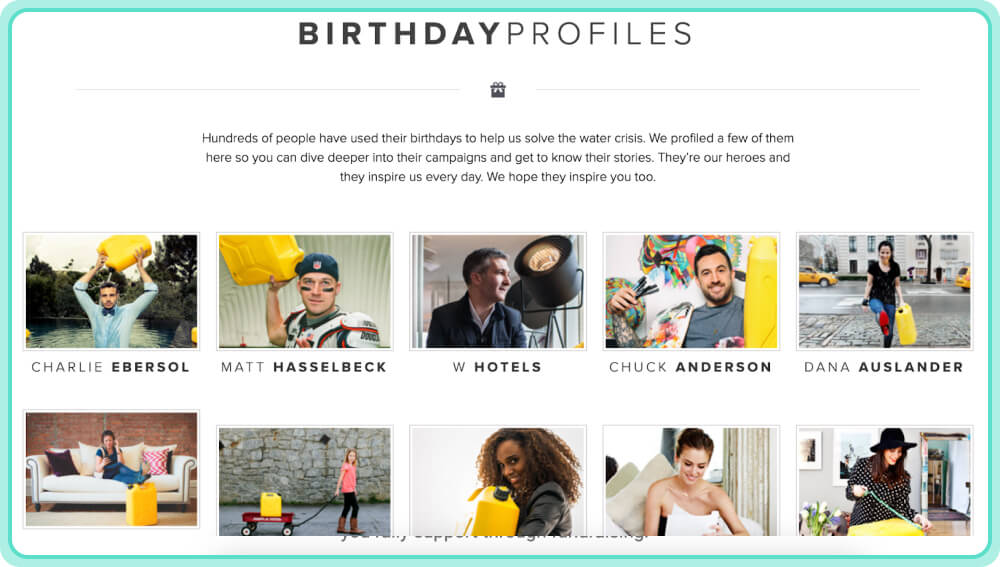
What it is: Supporters ask their network for donations to your nonprofit in lieu of birthday gifts.
Why it works: Birthdays come with a built-in audience (everyone who would wish a happy birthday) and a built-in occasion to ask. It is also one of the easiest entry points for a first-time fundraiser.
Tip: Make signing up a 60-second task. The longer the setup, the more drop-off. Charity: Water's birthday fundraising program is a strong reference for messaging and page design.
What it is: Participants register for an event (often a 5K or charity ride), create a fundraising page, and raise money in the lead-up.
Why it works: The event itself is the deadline that creates fundraising urgency. The shared experience builds community among fundraisers, which makes them more likely to come back next year.
Tip: Open team registration alongside individual. Teams raise meaningfully more than individuals because peer pressure inside the team drives performance. AIDS Walk events in cities worldwide are a long-standing example.
What it is: A branded hashtag challenge tied to a fundraising page (e.g., a tagged activity, a personal commitment, a video chain).
Why it works: Challenges are designed to be shared. Each post recruits the next fundraiser, which compounds reach without your team doing the outreach.
Tip: Build the challenge around something easy to film in 30 seconds. The lower the production lift, the more participants you get.
What it is: A short, intense P2P campaign timed to Giving Tuesday or another giving day, with fundraisers activated in the days leading up to it.
Why it works: The cultural moment does the awareness work for you. People are already in giving mode that day.
Tip: Recruit fundraisers four to six weeks before Giving Tuesday. Activate them with a coordinated launch the week of. Same-day signups rarely raise meaningful money.
What it is: A P2P campaign tied to a specific program goal: funding a research project, a building, a program expansion.
Why it works: A concrete goal gives fundraisers a specific story to tell. "Help us fund research into X" converts better than "support our mission."
Tip: The University of Montreal ran a P2P campaign on Zeffy to fund Multiple Sclerosis research and tripled their original fundraising goal. The fact that no platform fees came out of the donations meant every dollar fundraisers raised landed in the research budget.

What it is: Any P2P campaign you run year after year (gala P2P, summer walk, anniversary campaign) where alumni fundraisers re-enroll annually.
Why it works: Year-two performance dwarfs year-one because you start with a base of trained, engaged fundraisers. The compounding effect is real.
Tip: The week the campaign ends, invite the top performers back for next year. Strike while the win is fresh.
This is the operating playbook for your first or second P2P campaign. Each step has a checklist, a timing recommendation, and a common pitfall to dodge.
Timing: 8 to 10 weeks before launch.
Decide:
Pitfall: Setting a round-number goal with no math behind it. Goal = (target fundraisers) x (average raised per fundraiser). If you cannot back into that math, your goal is a wish, not a plan. Use a fundraising calendar template to plot milestones backwards from launch day.
Timing: 6 to 8 weeks before launch.
This is the single most consequential decision in the whole campaign. The fee structure compounds across every gift, the page UX determines fundraiser activation, and the reporting determines whether you can coach mid-campaign. We break down the selection criteria in detail in the how to choose a P2P platform section below.
Pitfall: Picking on feature lists alone and ignoring the effective fee load on a $25 gift. Read the fee section before you commit.
Timing: 4 to 6 weeks before launch (recruiting takes longer than you think).
Start with the people most likely to say yes:
Pitfall: Posting "anyone can sign up!" on social media and waiting. Personal asks convert. A direct email or phone call to a known supporter recruits a real fundraiser; a social post recruits almost no one.
Timing: 2 to 4 weeks before launch.
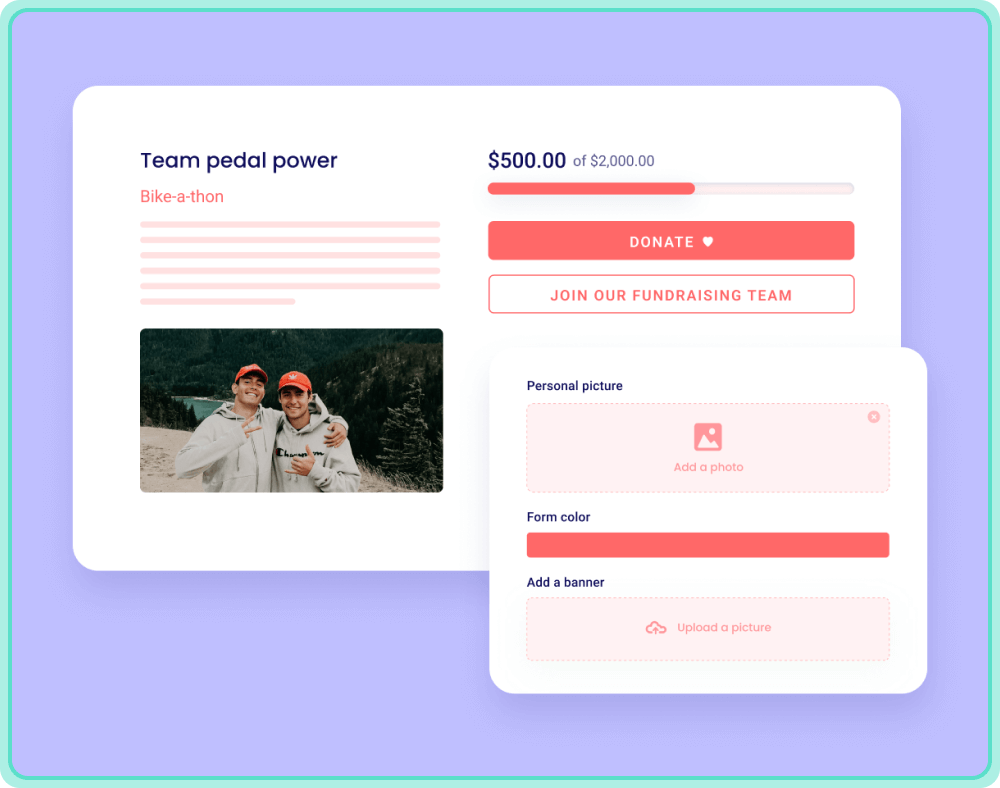
Each personal fundraiser page should include:
Pitfall: Skipping the page-build coaching call. A 30-minute group office hours session lifts activation rates more than any other intervention.
Timing: Launch day through week 2.
Give fundraisers everything they need to share without writing it from scratch:
Pitfall: Posting once and going quiet. The fundraisers who win are the ones who post three to five times across the campaign, not the ones who post once on launch day.
Timing: Throughout the campaign, with a major mid-campaign push.
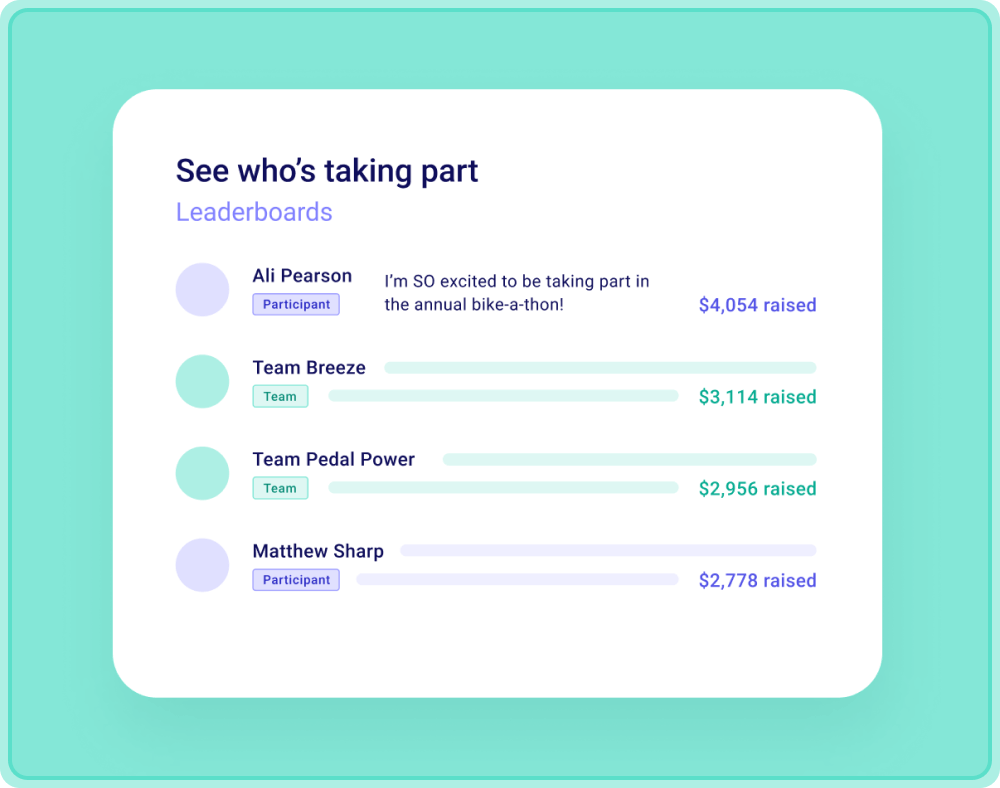
The mid-campaign drop-off is the biggest risk in any P2P campaign. Counter it with:
Pitfall: Treating engagement as a launch-day activity. The fundraisers who need motivation most are the ones at week three with $80 raised and no idea how to push past their first ring of friends. Reach them.
Timing: Within 48 hours of campaign close.
Every fundraiser gets thanked. Every donor gets thanked. The top performers get a personal call or hand-written note. Public recognition on your channels matters, but private gratitude is what builds the alumni base for next year. Plan the thank-you sequence before launch so it actually goes out on time.
Pitfall: Going dark after the campaign ends. The week after close is when you set up the relationship for the next twelve months. Skip it and you start year two from zero.
Why it happens: Nonprofits assume fundraisers will figure out what to post. Most will not. They want to help, but they do not know what to say.
The fix: Build a fundraiser toolkit before launch. Sample emails, sample texts, three or four social posts, branded graphics, a one-page FAQ, a 30-second video. Make the lift to fundraise close to zero.
Why it happens: A round-number goal feels aspirational. But when individual fundraisers see a $100,000 goal next to their $300 contribution, they feel pointless, not inspired.
The fix: Set the campaign goal as a function of (target number of fundraisers) x (realistic average per fundraiser). Set individual goals at a level a first-time fundraiser can actually hit. You can always raise the goal mid-campaign; you cannot un-set a deflating one.
Why it happens: Teams build a great campaign page, hit publish, and assume fundraisers will appear.
The fix: Recruit one-to-one before launch. Make a list of 30 to 50 likely fundraisers (board, recurring donors, past participants). Email or call each personally. Aim for 60% to 70% of your target fundraiser count signed up before launch day.
Why it happens: Nonprofit teams get busy. The launch is the visible moment, and the middle of the campaign feels quiet.
The fix: Schedule mid-campaign check-ins as calendar holds before launch. A short weekly update ("here are this week's top three pages, here's what's working") keeps fundraisers engaged. Personal nudges to fundraisers who have not posted recently lift activation more than any leaderboard.
Why it happens: Platform fees look small in isolation. 5% on a $25 gift is $1.25. But P2P is built on hundreds of small gifts, so the fee drag compounds.
The fix: Calculate the effective fee load on a $25 gift before you sign up. Platform fee + processing fee + any per-transaction charge. If the answer is 7% to 11%, that is the slice of every supporter's donation that does not reach your mission. See the platform selection section for the criteria.
The platform you pick determines the upper limit on what is possible. The way you recruit and coach fundraisers determines whether you get anywhere near that limit. P2P is a people program, not a software program.
Recruit in concentric circles, starting with the people most likely to say yes:
The ask is one-to-one and specific. A template:
Hi [Name], we're running our annual [campaign] in [month]. Last year [X] supporters raised [$Y]. I'd love for you to be one of them this year. It's about 15 minutes to set up your page, and we'll give you everything you need to share it. Can I count on you?
Personal. Specific. A clear ask with a small lift. Group emails to 200 supporters generate almost no fundraisers; 30 individual notes generate 15.
Total raised is the number everyone watches, but it is the worst single metric for measuring whether your P2P program is healthy. Track these five, and you will know whether to do it again next year.
| Metric | What it tells you | What good looks like |
|---|---|---|
| Total raised | Top-line outcome | Above last year, ideally above goal |
| Number of active fundraisers | Recruitment + activation performance | Hit your recruitment target and 70%+ of those fundraisers raised at least one gift |
| Average raised per fundraiser | Coaching effectiveness | Trending up year over year; first-year campaigns often land $200-$500 |
| New donor acquisition rate | Strategic value of P2P (this is the real prize) | 50%+ of donors are new to your organization |
| Fundraiser retention rate | Program sustainability | 30%+ of fundraisers return next year; top performers should be 60%+ |
| Social reach and shares | Top-of-funnel awareness | Trending up; correlates with new donor acquisition |
New donor acquisition is the metric most nonprofits underweight. The dollars from a P2P campaign matter, but the strategic value is the donors you would not have reached otherwise. Those donors only become recurring supporters if you have donor management built into the campaign so they land in your CRM, get receipted, and enter your cultivation flow automatically.
Most "best platform" guides drown you in feature checklists. Useful but not decisive. The real question is which platform makes your specific campaign math work. Five criteria, in priority order:
This is the most underweighted criterion and the most important one. P2P is built on lots of small gifts. A 3% to 8% platform fee plus a 2.2% to 2.9% + $0.30 processing fee compounds across hundreds of transactions. On a $25 gift, a 4% platform fee plus 2.9% + $0.30 processing equals roughly $2.05 lost, or 8%. Across 500 small gifts, that is over $1,000 your supporters intended for the mission that never gets there.
Across the platforms most small-to-mid nonprofits consider, platform fees commonly range from about 3% to 8%, on top of standard payment processing. The one outlier: Zeffy is the only completely free fundraising platform for nonprofits. No platform fees. No transaction fees. Every dollar a fundraiser raises lands with the nonprofit. Every other platform charges fees to fundraise.
If your supporters cannot create and customize a page in under 10 minutes without calling support, your activation rate collapses. Test the page-builder yourself before committing. Look for: photo/video upload, story editor, goal setting, social share buttons, mobile-responsive design, and team page hierarchy if you want teams.
Leaderboards, donor-board messages, milestone notifications, and progress thermometers are not nice-to-haves. They are how you counter mid-campaign drop-off. Verify these are included in the tier you are picking, not gated behind an upgrade.
Some platforms ship with team structures, fundraiser dashboards, and coaching workflows out of the box. Others are crowdfunding or merch tools repurposed for P2P. Repurposed platforms leave you stitching together features that do not quite fit. P2P-native is meaningfully better if your campaign relies on team competition or recurring fundraiser cohorts.
The strategic value of P2P is new-donor acquisition. If donor records do not unify with your other channels (direct gifts, event tickets, recurring giving), those new donors evaporate after the campaign closes. Look for built-in donor management or a clean integration with the CRM you already use.
For a deeper head-to-head on the specific platforms most nonprofits are weighing, see our roundup of peer-to-peer fundraising platforms, or see how Zeffy compares to other P2P platforms.
The only zero-fee P2P platform. Every dollar a fundraiser raises from their network reaches the mission, which is the only way P2P's small-gift multiplication math actually pencils out.
Deep, contract-priced P2P campaign tooling built for large nonprofits. Not the right fit for a first or second campaign.
Purpose-built P2P software with deep endurance-event, streaming, and DIY-fundraiser tooling. Pricing is sales-quoted and onboarding is slow.
A versatile fundraising platform with P2P, events, auctions, and text-to-give bundled into a subscription. Good for nonprofits that need a bit of everything in one place.
An all-in-one fundraising platform with a built-in donor CRM. Peer-to-peer is a premium feature, so the free plan is not the one that matters here.
A user-friendly P2P-focused platform. Starter tier is free with donor tips; team pages and branded campaigns sit behind paid tiers up to $315/month plus a platform fee on transactions.
A personal-crowdfunding platform; verified 501(c)(3) charities pay 2.2% + $0.30 per donation, but the product is built around one-off campaigns rather than team-and-individual P2P structures.
Crowdfunding software repurposed for P2P. Custom donation pages and mobile-friendly, but limited P2P-specific engagement tooling.
An all-in-one fundraising solution with P2P capabilities. Designed for small nonprofits that want a low monthly cost but limited P2P depth.
A custom-merchandise tool where supporters design and sell branded apparel. Not a fundraising platform in the donation sense; include only if your P2P scope explicitly covers merch.
Yes. Zeffy is completely free for nonprofits. No platform fees. No transaction fees. Every dollar a fundraiser raises through their personal page lands with your nonprofit. Donors are given the option (never required) to add an optional contribution to Zeffy at checkout, which is how the platform stays free for nonprofits.
Four to eight weeks is the sweet spot for most nonprofits. Shorter campaigns do not give fundraisers enough time to share and re-share. Longer campaigns lose momentum and donor attention. If your P2P is tied to an event (a walk, a giving day), back-time the campaign so the final push lands in the week leading up to it.
Work backwards: target realistic average per fundraiser = recruitment goal. A first-time fundraiser commonly raises $200 to $500. If your campaign goal is $25,000 and you expect $350 per fundraiser, you need about 70 active fundraisers, which usually means recruiting 100 to account for activation drop-off.
P2P uses many personal fundraiser pages under one nonprofit campaign; supporters raise on behalf of the nonprofit from their own networks. Crowdfunding is usually one campaign page with one direct ask, often for a specific project or emergency. P2P is better for ongoing supporter engagement and recurring events; crowdfunding is better for one-time, project-funded goals with a hard deadline.
Start with the people closest to the mission: board members, recurring donors, past event participants, and any prior P2P alumni. Board members go first so they set the tone. Recurring donors say yes most often because they have already cleared the giving hurdle. One-to-one asks (email or phone) recruit; social-media blasts almost never do.
Mid-campaign drop-off is the biggest killer of P2P results. Counter it with weekly leaderboard updates, public shout-outs on your social channels when fundraisers hit milestones, personal texts to fundraisers who have stalled, and a mid-campaign rally or check-in call. The fundraisers who need motivation most are the ones at week three with $80 raised and no path forward. Reach them directly.
Total raised matters, but it is a lagging indicator. The metrics that tell you whether your program is healthy are: number of active fundraisers (activation rate), average raised per fundraiser (coaching effectiveness), new donor acquisition rate (the real strategic prize), and fundraiser retention rate year over year (program sustainability). Track all five.
Yes. The two inputs that matter most are personal recruiting (which takes time, not headcount) and a good fundraiser toolkit (which you build once and reuse). A two-person team that recruits 30 committed fundraisers and gives them strong materials will outperform a five-person team that broadcasts to 500 passive followers.


%201.avif)
Compare 8 highly-rated peer-to-peer fundraising platforms by price and key features. Choose the best one among Zeffy, Classy and more.


From peer to peer fundraising tips to how to host a peer-to-peer fundraising campaign on Zeffy, this webinar is your guide to peer to peer fundraising.

.webp)


