Ce que 1 000 donateurs nous ont dit
Nous savons que la collecte de fonds s'accompagne de beaucoup de pression, surtout lorsque les budgets sont serrés. C'est pourquoi nous avons interrogé 1 000 donateurs à travers les États-Unis pour savoir ce qui les inspire à donner, ce qui les rebute et ce qui les fidélise. Ce rapport est notre façon de soutenir les 50 000 organismes à but non lucratif et plus qui utilisent Zeffy, en partageant des données concrètes pour vous aider à entrer en contact avec vos donateurs et à amasser davantage. Nous espérons qu'il vous aidera à accroître votre impact.


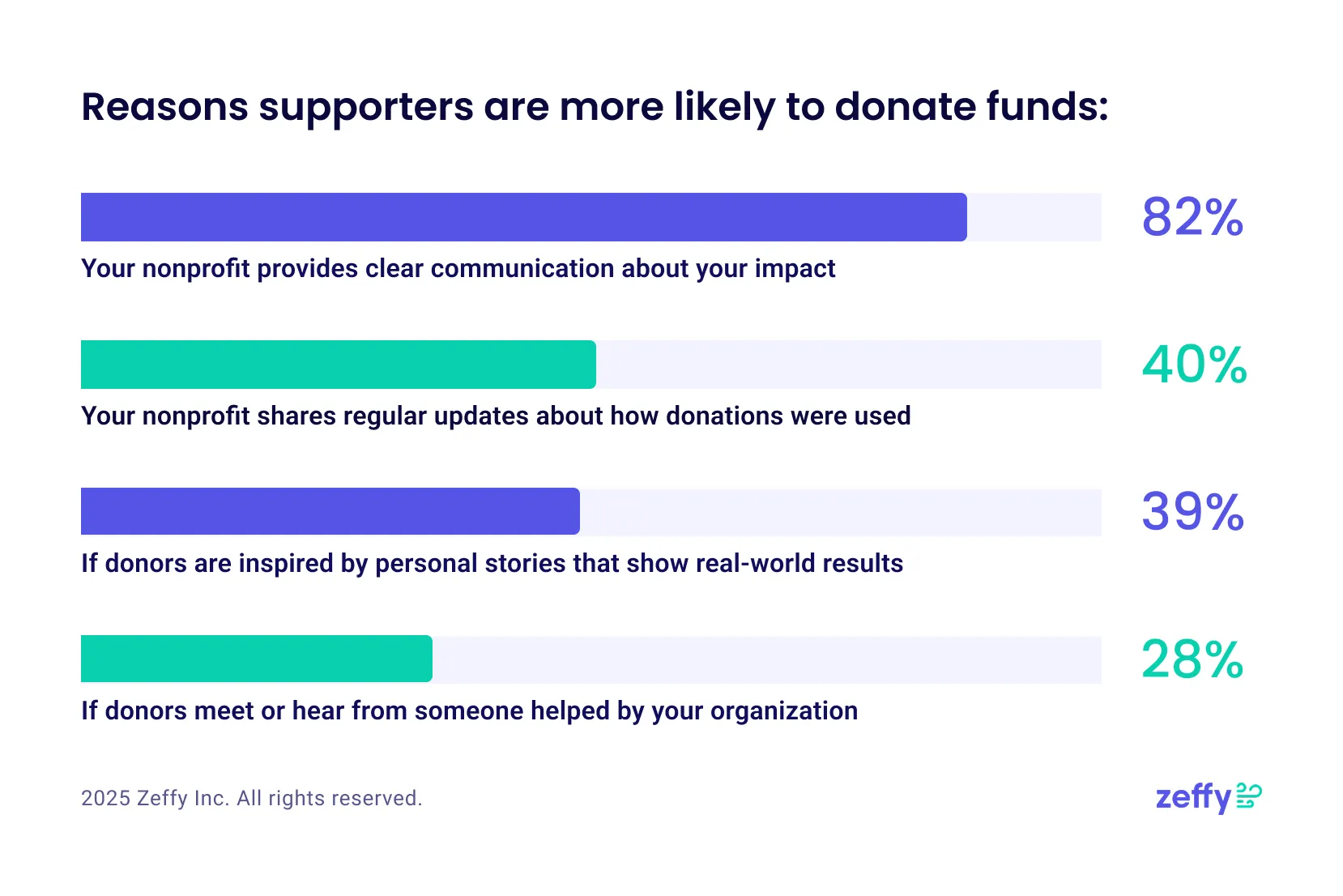
Regular updates lead to 40% more donations
Donors want to know what their gift made possible. But there’s a gap: only 36% say they currently have easy access to that kind of information. When donors understand the impact of their gift, they’re more likely to give again… and give more.
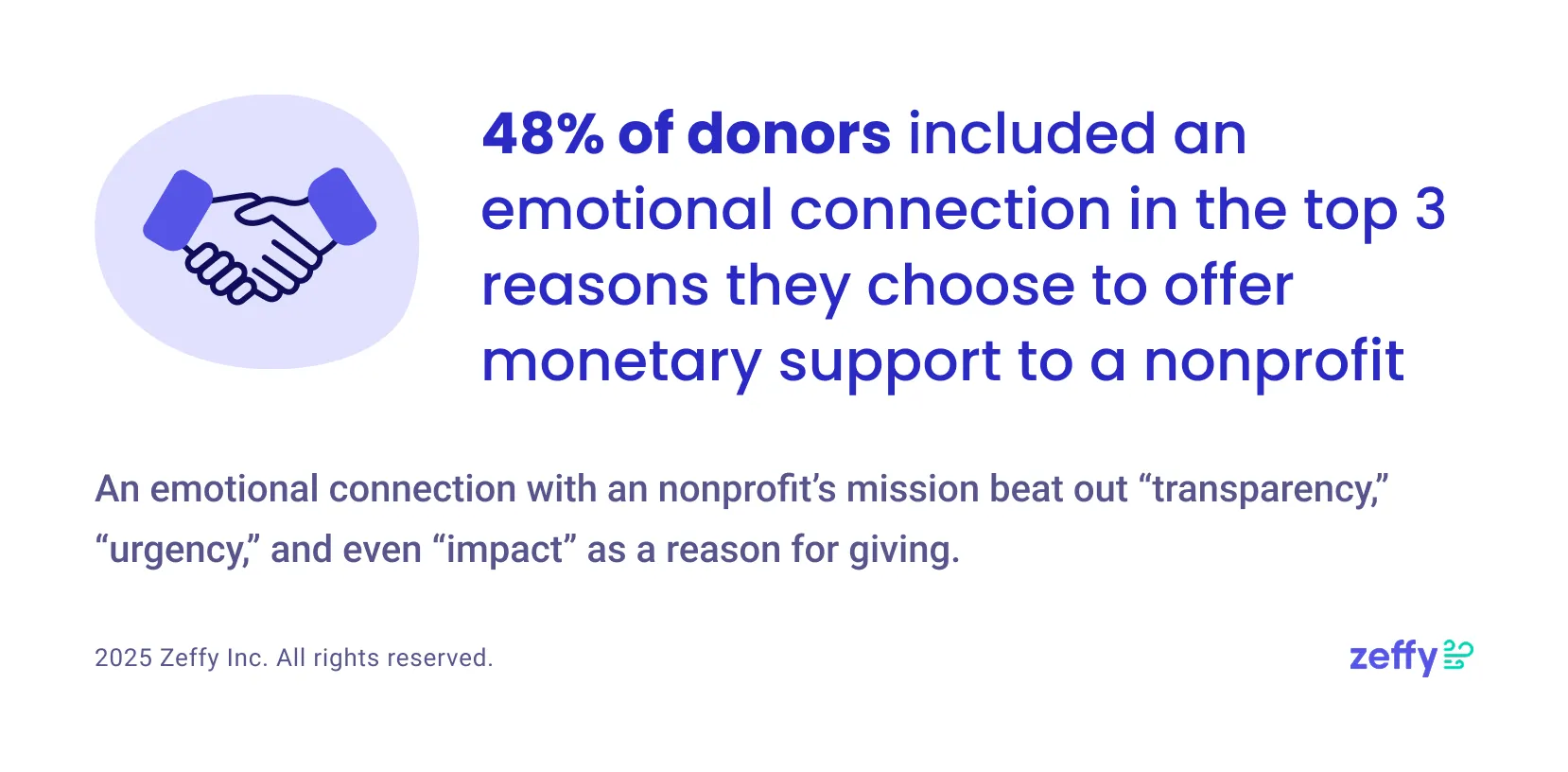
Target donors emotionally tied to your mission
The data is clear: connection motivates donors to act. Emotional connection was the strongest motivational driver for increased giving this year, beating urgency, impact, and even transparency. Seek out individuals who have been personally affected by the issues you work on or who have supported similar causes in the past. They’re more likely to give, and more likely to stay.
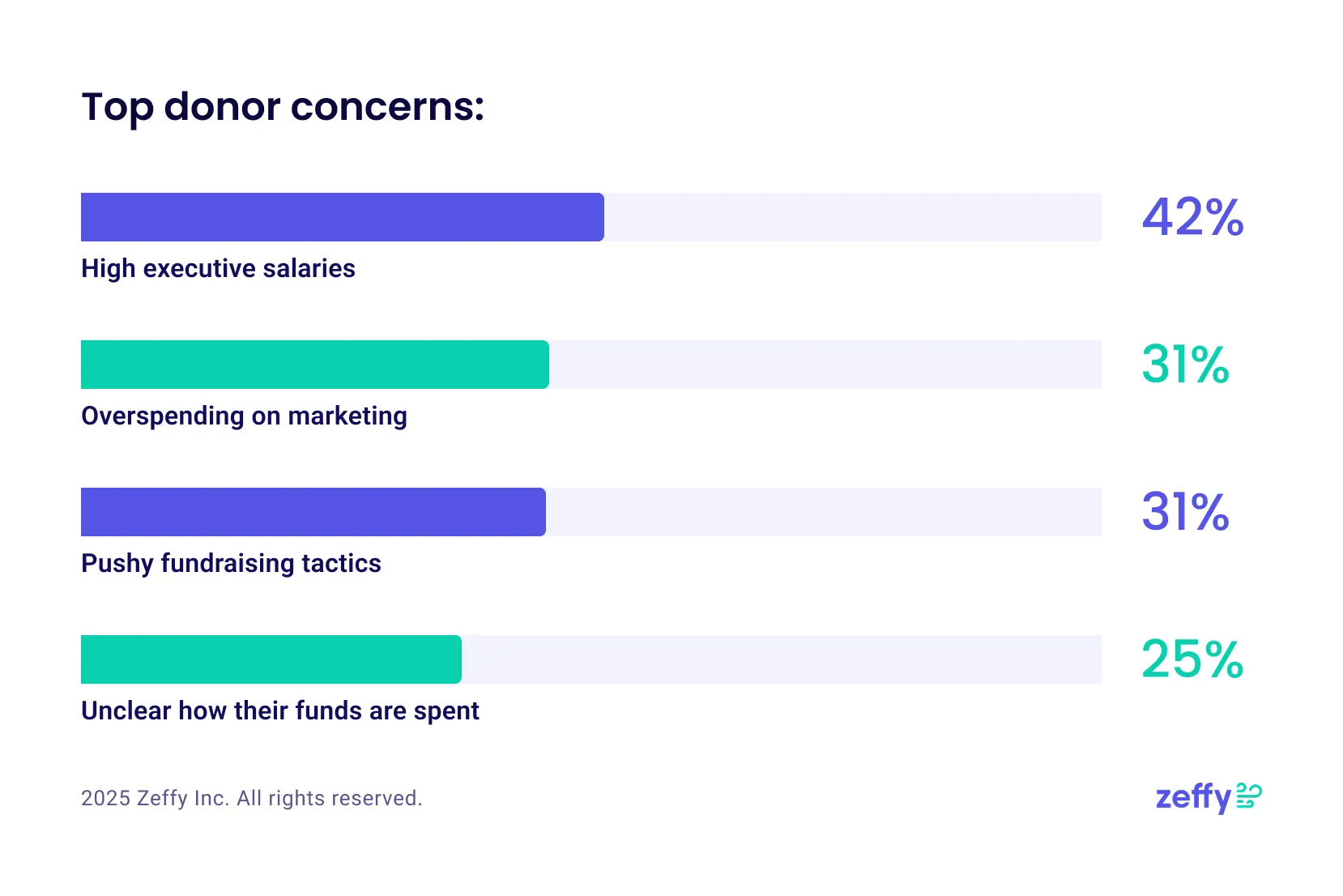
Donors have misconceptions: address them early
Donors care about where their money goes—and when things feel unclear, they walk away. 42% believe nonprofit executives are overpaid, and 31% think too much is spent on marketing and fundraising fees. Even though these costs often help nonprofits grow, many donors don’t see it that way
Show donors how funds are put to use at your nonprofit
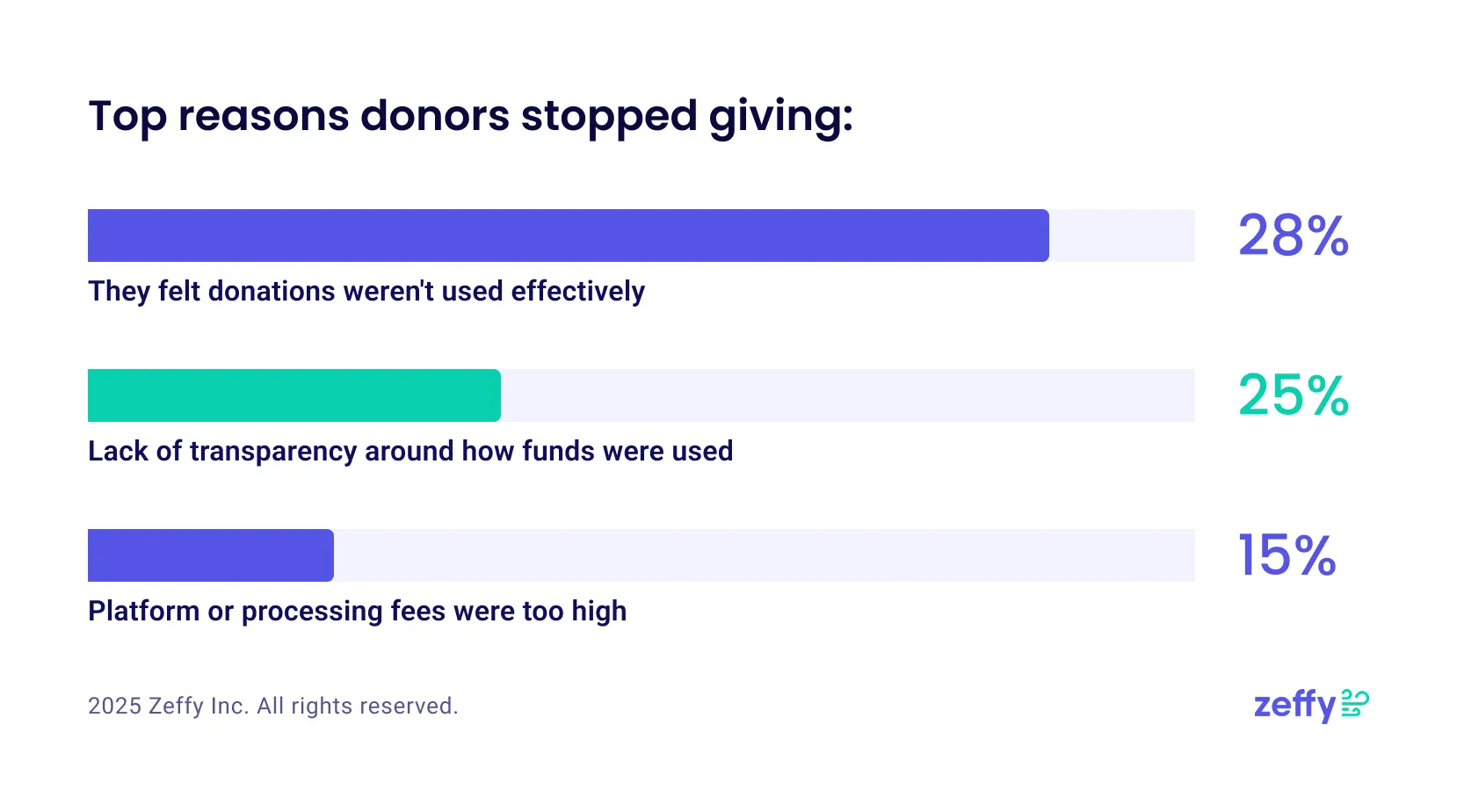
40% of donors said they walked away because they didn’t feel their donation was used effectively, didn’t know where it went, or were turned off by high platform fees. The takeaway? Show donors exactly how you use their support. When they see you’re being smart with their money, they’ll stick with you.
Simplify your donation experience
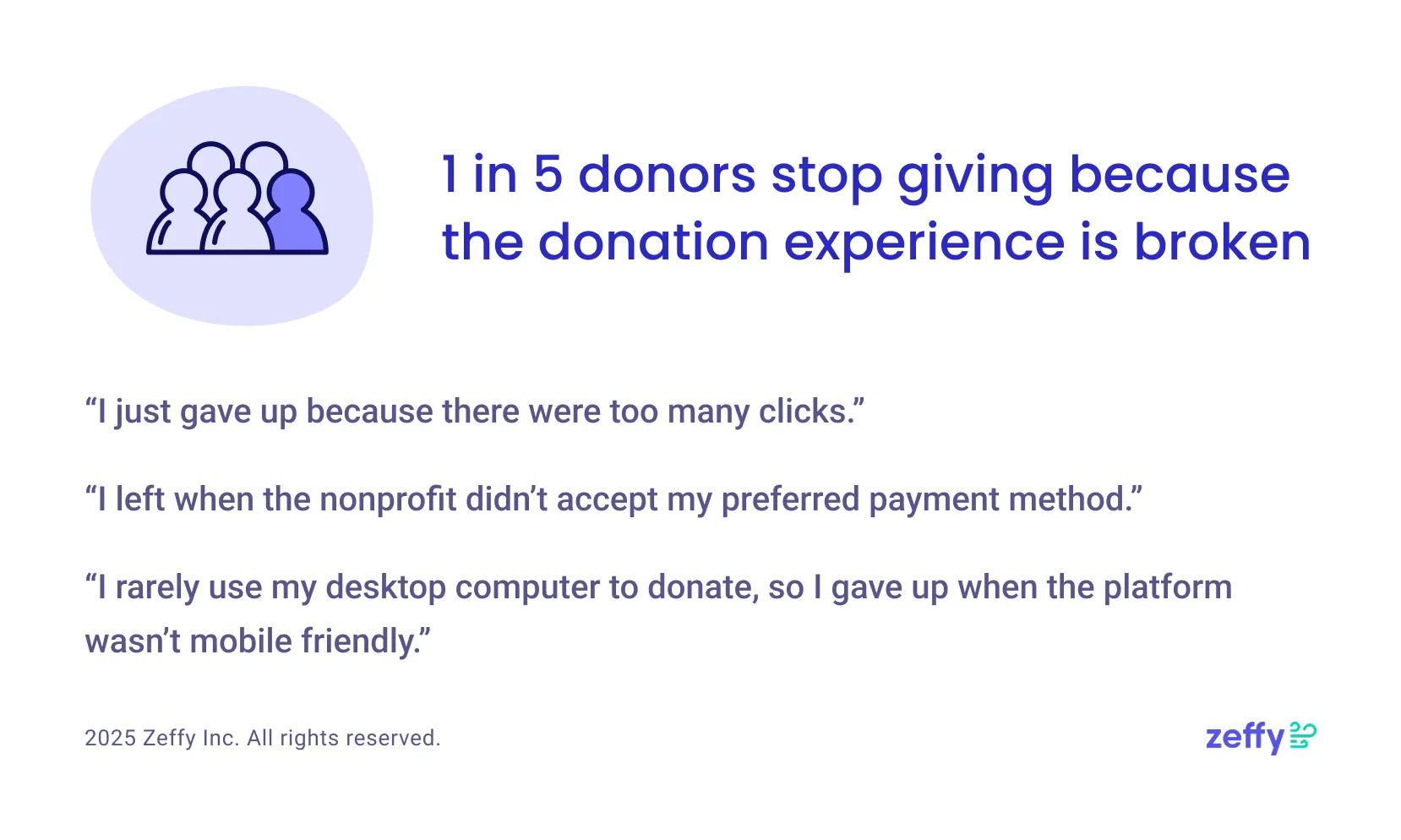
The data is clear: if donating feels like a hassle, people won’t do it. Even small points of friction—too many clicks, missing payment options, or a clunky mobile page—are enough to make donors abandon their gift. A smooth, mobile-friendly donation experience isn’t a nice-to-have; it’s non-negotiable.
Regular updates lead to 40% more donations
Donors want to know what their gift made possible. But there’s a gap: only 36% say they currently have easy access to that kind of information. When donors understand the impact of their gift, they’re more likely to give again… and give more.
Target donors emotionally tied to your mission
The data is clear: connection motivates donors to act. Emotional connection was the strongest motivational driver for increased giving this year, beating urgency, impact, and even transparency. Seek out individuals who have been personally affected by the issues you work on or who have supported similar causes in the past. They’re more likely to give, and more likely to stay.
Donors have misconceptions: address them early
Donors care about where their money goes—and when things feel unclear, they walk away. 42% believe nonprofit executives are overpaid, and 31% think too much is spent on marketing and fundraising fees. Even though these costs often help nonprofits grow, many donors don’t see it that way
Show donors how funds are put to use at your nonprofit
40% of donors said they walked away because they didn’t feel their donation was used effectively, didn’t know where it went, or were turned off by high platform fees. The takeaway? Show donors exactly how you use their support. When they see you’re being smart with their money, they’ll stick with you.
Simplify your donation experience
The data is clear: if donating feels like a hassle, people won’t do it. Even small points of friction—too many clicks, missing payment options, or a clunky mobile page—are enough to make donors abandon their gift. A smooth, mobile-friendly donation experience isn’t a nice-to-have; it’s non-negotiable.
We created this study to help you raise more, without guessing what donors care about. We asked donors across the U.S. why they give, what turns them off, and what keeps them coming back. In just two weeks, over 1,000 people responded.
We cleaned the data by removing duplicates and incomplete answers, then looked for the patterns—what came up again and again in their responses.The study reflects everyday donors from across the U.S. They gave under $10,000 last year, supported all kinds of causes, and came from every state, age group, and gender.
Use it to shape your next campaign. Share it with your team. Or keep it handy the next time you wonder: what are my donors really thinking?
We created this study to help you raise more, without guessing what donors care about. We asked donors across the U.S. why they give, what turns them off, and what keeps them coming back. In just two weeks, over 1,000 people responded.
We cleaned the data by removing duplicates and incomplete answers, then looked for the patterns—what came up again and again in their responses.The study reflects everyday donors from across the U.S. They gave under $10,000 last year, supported all kinds of causes, and came from every state, age group, and gender.
Use it to shape your next campaign. Share it with your team. Or keep it handy the next time you wonder: what are my donors really thinking?