How is Zeffy free?

How is Zeffy free?
Zeffy relies entirely on optional contributions from donors. At the payment confirmation step - we ask donors to leave an optional contribution to Zeffy.
Learn more >
Donorbox is a solid donation platform with strong recurring giving features and a 4.8/5 rating from over 600 reviews on Capterra. There’s a catch:
If you’re starting a small nonprofit and need a donation platform, you may be looking at Donorbox, but noticing the fees seem high. Is Donorbox worth it for a new nonprofit that needs recurring giving and tax receipts, or is there a free alternative that actually works?
Donorbox is an all-in-one online fundraising platform tailored to what nonprofits, charities, churches, and other organizations need to raise funds effectively. It’s widely used for organizations of all sizes, from grassroots initiatives to large-scale nonprofits.
Donorbox may appeal to new and small nonprofits because it’s easy to set up and includes customizable donation forms, recurring giving options, and automatic tax-deductible receipts. Donorbox can feel like a quick win, but many don’t realize it’s not truly “free”.
On top of Stripe or PayPal processing fees, Donorbox charges a platform fee that adds up over time. Many small teams don’t notice until they look back and realize they lost thousands of fundraising dollars to fees they didn’t fully understand.
But the real question most nonprofits have isn't what Donorbox does, it's what it costs.
Donorbox charges a platform fee of 2.95% on top of payment processing for the Standard plan. On $50,000 raised, that’s over $1,475 in platform fees alone before processing costs. For the Pro and Premium plans, platform fees are discounted, but users will start to see a monthly fee of $150 or more.
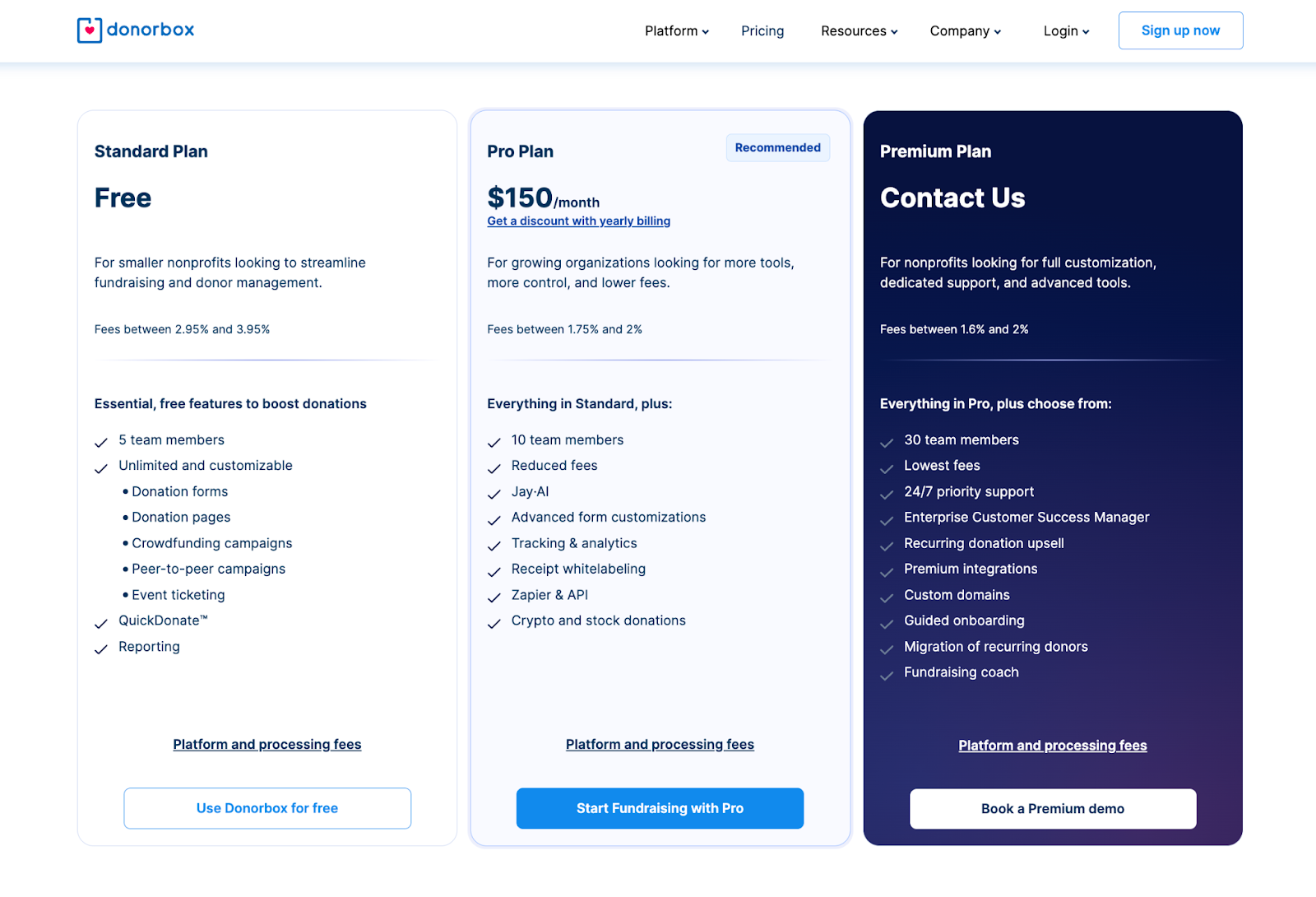
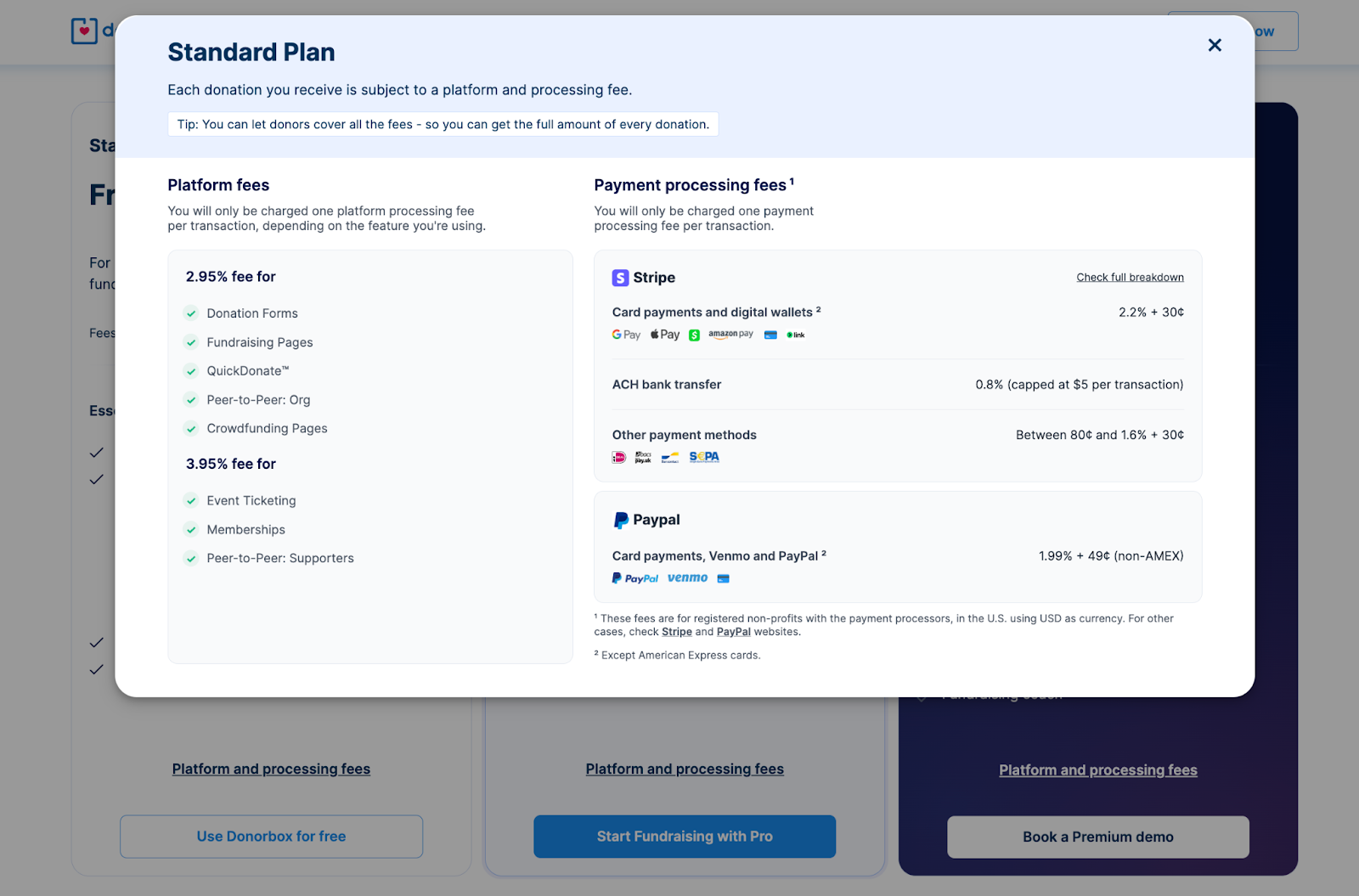
That number often surprises new nonprofits, especially scrappy founders who chose Donorbox pricing because the Standard plan is labeled “free” or low-cost at the start.
The real cost comes in when you look closer at the platform fees Donorbox itself takes on every donation, which start at 2.95% and can increase to 3.95% if you want to utilize event ticketing, memberships, or peer-to-peer fundraising. On top of that, you’ll still pay Stripe or PayPal processing fees, which typically average around 2.2% + $0.30 per transaction.
While each individual fee may seem small, they can certainly compound as your fundraising grows. There is an option on Donorbox to let donors cover processing fees for you at checkout, placing the extra costs on them instead of your nonprofit.
Let’s look closer at the true cost of Donorbox:
| Monthly fee | Platform fee | Processing fee | Estimated total fees taken from $10K raised in one year | Estimated fees taken from $50K raised in one year | |
|---|---|---|---|---|---|
|
Donorbox Standard |
$0 |
2.95% - 3.95% per transaction |
~2.2% + $0.30 per transaction |
~$545 |
~$2,725 |
|
Donorbox Pro |
$150 |
1.75%-2% per transaction |
~2.2% + $0.30 per transaction |
~$2,225 |
~$3,925 |
|
Donorbox Premium |
Custom quote required |
1.6%-2% per transaction |
~2.2% + $0.30 per transaction |
~$450 + monthly fees |
~$2,050 + monthly fees |
|
Zeffy |
$0 |
0% |
0% to nonprofit |
$0 |
$0 |
*Transaction fees reflect Stripe’s nonprofit rates
For many small nonprofits, seeing thousands of dollars lost to fees in a year is the moment of realization they need. For a nonprofit raising $10,000, Donorbox’s platform fees alone cost roughly $295.
“The percentage taken out of each donation is beginning to be a little high. We are a very small non profit and every dollar counts!” - Jessi C.
That money could have gone directly toward programs, emergency support, or simply extending your runway another month. The only way to avoid those fees is to pass them on to donors by default, which can hurt trust and deter supporters from giving as much as they would otherwise.
For overloaded operators already stretched thin, fee transparency matters. It’s not just about whether Donorbox works, because it does. It’s about whether the cost aligns with your size, margins, and mission. Recurring donations, tax receipts, and clean donation forms are essential, but they’re also available on 100% zero-free platforms like Zeffy that don’t leave you with a growing fee burden.
If you’re evaluating Donorbox pricing and wondering whether it’s sustainable long-term, especially as donations increase, you’re asking the right question.
When Village Reach lost $1,500 to Donorbox fees, they knew it was time for a change. After years of steady fundraising, they took a closer look at their donation data and discovered how much of their revenue was quietly being lost to platform and processing fees with Donorbox, which was misaligned to their vision of being a nonprofit with as little overhead as possible.
What surprised them wasn’t just the total; it was how easy it was to overlook. Like many small and mid-sized nonprofits, they had prioritized functionality and reliability, assuming fees were simply “the cost of doing business.”
“Financial stewardship is one of our core values, so platform fees were a real concern with Donorbox, where we were losing 2.95% on general donations and 3.95% on events, peer-to-peer, and memberships. That didn’t sit right with our commitment to transparency.” - Alyssa Roman, Mission Communications Lead at Village Reach
Once they compared that cost to a truly free alternative in Zeffy, the math became impossible to justify.
Village Reach’s experience highlights a turning point many nonprofits face, which is that Donorbox works great, but that doesn’t automatically make it the most responsible choice for long-term fundraising.

Donorbox holds a 4.8/5 on Capterra from 600+ reviews — it’s a legitimate, well-built tool. The question is whether paying fees makes sense when a genuinely free option exists.
Donorbox is legit. It’s a PCI-compliant donation platform that integrates securely with Stripe and PayPal, and it’s trusted by thousands of nonprofits worldwide. If you’re researching pros and cons or scanning reviews before committing, you’ll likely find that the reassurance is there.
From a functionality standpoint, Donorbox does what it promises. Nonprofits use it successfully for recurring donations, customizable donation forms, events, CRM, and automatic tax-deductible receipts. Many organizations note its ease of setup and reliability, especially for small teams without technical support.
Functionality isn’t the deciding factor for most nonprofits when they start to look at how the cost impacts their fundraising totals. For founders and operators just trying to do the best with what they have, budgets are tight and every dollar matters. Even “reasonable” fees deserve some level of scrutiny and any unclear information or fees that rise can damage trust.
Legitimacy isn't the issue. The issue is whether paying platform fees makes sense when free alternatives exist.
Donorbox is highly rated on platforms like Capterra for a reason. It’s a legitimate, well-built tool that comes with a lot of aspects nonprofits love and some that cause barriers to fundraising success especially for small or new organizations.
“One downside is that some advanced features and customization options are limited on the free plan, which can require upgrading sooner than expected as an organization grows. In addition, deeper reporting and analytics could be more flexible for users who want more detailed donor insights without exporting data externally.” - Siim S.
Across Capterra, G2, and Trustpilot, users consistently praise Donorbox for being easy to use, quick to set up, and reliable for recurring donations and basic fundraising needs. It’s often described as a strong starter platform for small nonprofits without technical teams.
The most common complaints center around cost and limitation. Specifically, fees that are confusing and add up over time are mentioned continuously among basic CRM and reporting functionality that come with the low-cost plan.
“The website is easy to maneuver through, and the events are easy to manage and track. When I had a question, the customer support was a great help. I appreciate Donorbox and will continue to use it for my non-profit.” - Julie M.
“Overall, Donorbox has been a very reliable and efficient fundraising tool for us. It allowed us to launch digital donation campaigns quickly and professionally, with minimal technical overhead. Donors find the process smooth, and from an administrative perspective it saves a lot of time.” - Mohamed O.
“The donation tracking works well, customer support has been responsive, and the platform continues to improve with new features. While it doesn’t cover every need (like deeper event and volunteer management), it’s an excellent solution for small to medium charities looking for a simple, trusted way to accept and manage donations online.” - Matt P.
“The amount taken for processing fees. Very few donors utilize or understand that they can cover the costs of processing the payment.” - Kevin M.
“Sometimes the design was a little old school. It would be great if we had some more modern colour schemes and styles.” - Zara R.
“Some features, like advanced event management tools or deeper volunteer/staff management, feel limited unless you pay for higher tiers. The fees can also add up quickly for smaller nonprofits.” - Hakim C.
Together, these examples of user feedback can paint a clearer picture of Donorbox. As donations grow, many smaller nonprofits find that confusing fees, limited reporting, and costs that quietly compound over time become harder to justify, especially when more cost-effective alternatives are available.
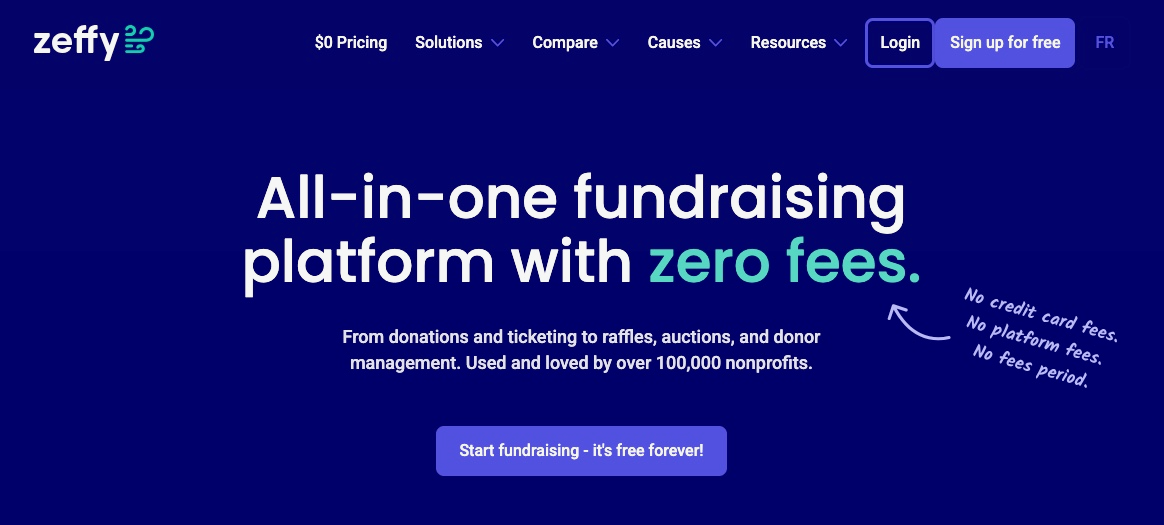
Zeffy is the only fundraising platform that charges zero fees (0% platform fees, 0% processing fees), not nonprofit budgets.
Over 100,000 nonprofits have switched to Zeffy’s 100% free model, saving them anywhere from $500 to $2,500 per year for their mission.
For nonprofits weighing platform costs with high functionality and a variety of campaign types, the choice is clear. While Donorbox brings a lot to the table in functionality, fees reduce every donation your nonprofit rightfully deserves.
Zeffy eliminates the confusion, complexity, and trust barrier, ensuring more of your funds go straight to your programs and mission, just like your donors intended them to.
| Feature | Donorbox Standard Plan | Zeffy |
|---|---|---|
| Monthly Fees | $0, with increased rates for Pro and Premium plans | $0 - ever |
| Platform Fees | 2.95%+ | 0% |
| Payment Processing | 2.2% + $0.30 | $0 |
| Recurring Donations | Yes | Yes |
| Tax-Deductible Receipts | Yes | Yes |
| Event Ticketing | Yes | Yes |
| Membership Management | Yes | Yes |
| Customizable Donation Forms | Yes | Yes |
| Donor Management/CRM | Yes | Yes |
| Online Store | No | Yes |
| Rafles | No | Yes |
| Auctions | No | Yes |
| Setup Time | Quick | Quick |
Village Reach is just one of the organizations saving thousands by making the switch to Zeffy. If your nonprofit is tired of paying for basic functionality, Zeffy gives you everything you need without the hidden costs.
From recurring donations to tax receipts and embeddable forms, you get everything you need to diversify fundraising income, plus complete peace of mind knowing your donors’ gifts go exactly where you intend.
Yes, Donorbox is PCI compliant, holds a 4.8/5 rating on Capterra from over 600 reviews, and is used by thousands of nonprofits. The platform is trustworthy, however the main consideration is whether its fee structure fits your budget.
Donorbox Standard plan charges a 2.95% platform fee on top of 2.2% + $0.30 per transaction for payment processing. As you need more functionality and customization, Donorbox offers its Pro plan and Premium plan, which both come at additional monthly costs.
Yes, Zeffy is a truly free alternative to Donorbox that charges 0% platform fees and 0% processing fees for nonprofits. It’s, and over 100,000 nonprofits are already using it to see more of what they earn go toward their mission.
Zeffy is better for small nonprofits that need to make every dollar count and don’t want to see a percentage of donations go toward a platform fee. Donorbox serves small nonprofits with many features that are easy to set up, but can introduce new costs that are easy to overlook and add up over time.
Donorbox charges processing fees in addition to its 2.95% platform fee. The platform works with standard Stripe or PayPal processing fees, which are typically 2.2% + $0.30 per transaction. Processing fees remain the same across Standard, Pro, and Premium plans, while platform and monthly fees change by tier.
You can easily switch from Donorbox to Zeffy without disruptions to your fundraising timelines. Zeffy provides free migration support, and setup takes under 15 minutes. From that point, savings begin as you take advantage of the only zero-fee fundraising option.


Rated 4.9/5 on G2. See real pros, cons, and results from nonprofits using the only zero-fee fundraising platform. Read the full breakdown.


.webp)


