How is Zeffy free?

How is Zeffy free?
Zeffy relies entirely on optional contributions from donors. At the payment confirmation step - we ask donors to leave an optional contribution to Zeffy.
Learn more >
Despite the rise of social media and other digital channels, email remains one of the most effective communication tools available to UK charities. Strategically crafted email campaigns engage donors, inspire supporters, and amplify your cause.
A solid email marketing programme gives your charity a reliable fundraising channel. Regular updates, appeals, and stewardship emails keep supporters informed and connected with your work.
This guide covers the key benefits of email marketing for UK charities, best practices for launching effective campaigns, and the types of emails that deliver results.
In this article:
Email offers one of the highest returns on investment of any outreach channel available to charities. Sector benchmarks from NCVO and the Chartered Institute of Fundraising consistently show email among the most cost-effective ways to reach supporters and drive donations.
Donors and supporters prefer email as a communication channel. A significant share of supporters say they prefer to hear about updates and appeals by email, and many report that emails inspire them to give or take action. As an owned channel, email puts your charity in direct contact with supporters, independently of algorithm changes or platform fees.
Email campaigns benefit UK charities in several ways, all contributing to one goal: spend less and raise more.
Small UK charities typically stitch together several separate tools: a newsletter platform, a donation page, a ticketing system, and a CRM. That stack can cost £50 to £200 or more each month.
Zeffy's 100% free supporter management platform consolidates supporter communications, donations, ticketing, and supporter management in a single platform with no platform fee and no transaction fee, ever.
Personalised email communication builds stronger relationships with your supporters.
By delivering relevant content to each segment, you foster stronger relationships and continue raising money for your cause.
Email marketing is a highly effective tool for boosting donor engagement. Regular communication keeps supporters informed about your charity's activities, impact, and upcoming events.
Email campaigns with clear calls-to-action encourage supporters to take specific steps: making a donation, signing a petition, or volunteering.
Email is the primary channel most UK charities use to capture and update Gift Aid declarations. A valid declaration lets your charity reclaim 25p from HMRC for every £1 donated by a UK taxpayer, at no extra cost to the donor.
Email is also the most effective way to convert one-off donors to regular giving. Direct Debit is the dominant UK regular-giving channel, accounting for around 31% of all UK charity donations. A well-timed email sequence can guide supporters from their first gift to a monthly Direct Debit commitment, securing a more reliable income stream for your charity.


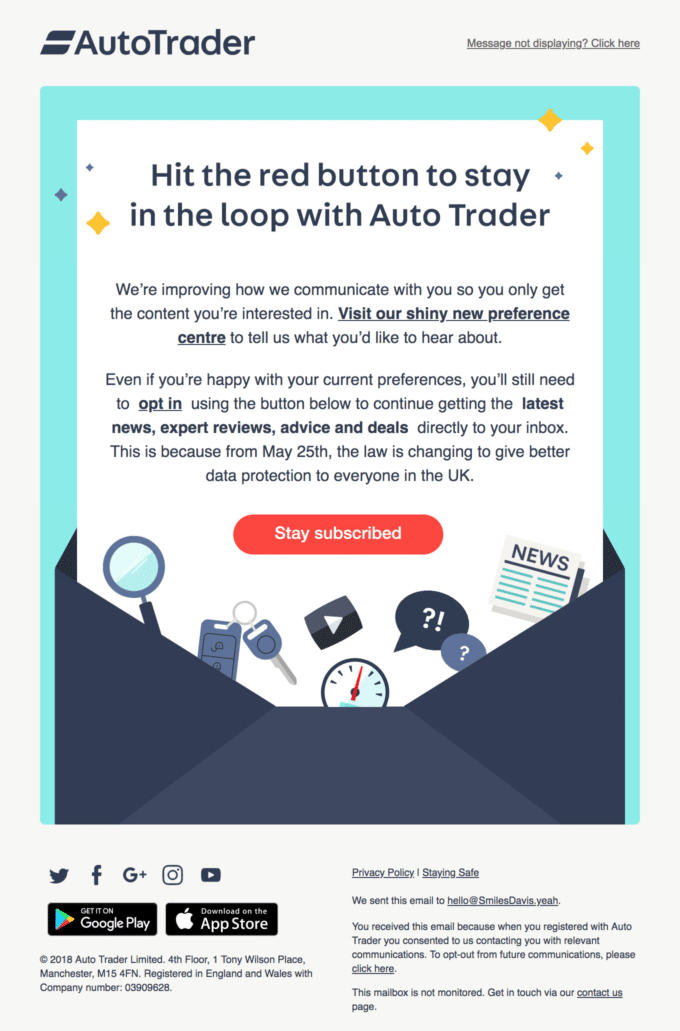
Welcome email campaigns introduce your organisation and share your mission with new subscribers. They are your charity's first impression.
The series can be structured as follows:

Newsletters are the most common yet effective component of a charity email marketing campaign. Here are five reasons why newsletters work:
Since newsletters are recurring emails with a consistent structure, sent on a regular schedule, you can create email templates to save time.

Make your appeal emails emotionally compelling to increase donations. Use stories, not just statistics.
Instead of asking for funds to help children in general, share a specific story about a young person your charity has supported. Rather than a generic "Donate now", use copy such as "Help feed a child this winter" to make the impact tangible. It shows supporters exactly how they are making a difference.
Your charity will always need supporters to further its mission. Use advocacy emails to encourage passionate people to act on issues they care about.
An advocacy email should include:

Sending thank-you emails with a short appreciation note and an update on your work is a proven way to boost donor retention.
UK supporters strongly favour email as the primary thanking channel: quicker than post, and warmer than a receipt-only acknowledgement. By subscribing to your emails, supporters have signalled they want to hear from your charity. Keeping them informed helps them stay engaged and encourages them to give again.
This is also the natural moment to remind eligible UK taxpayers to complete or update their Gift Aid declaration, adding 25p per £1 to every qualifying donation at no cost to the supporter.
Thank-you and update emails can highlight:

Celebrate your charity's achievements with your supporters. Success stories help them see the real difference their contributions have made.
Highlight specific stories that demonstrate your charity's impact. These may include:
Sharing this kind of content builds trust and strengthens your charity's credibility with supporters.
The UK giving calendar offers rich opportunities throughout the year. Capitalise on key moments by planning seasonal email campaigns in advance.
Key UK fundraising moments to build campaigns around include:
Plan your seasonal fundraising campaigns well in advance and notify supporters through timely email communications. Encourage them to donate to a meaningful cause rather than buying another gift.

Targeting a significant awareness day that aligns with your charity's mission can help you raise substantial donations.
UK awareness moments worth building campaigns around include:
Find a significant day that aligns with your charity's work and build your email marketing around it. Include content related to the occasion and clear guidance on how supporters can get involved.

Email automation saves time and maintains consistent engagement with your donors.
Divide your welcome email into a three-part series to introduce your charity, its mission, and its impact. Automating thank-you emails for every milestone your donors reach demonstrates genuine appreciation for their support.
Sometimes your charity emails are purely focused on requesting donations. These fundraising emails are essential to encourage:
You can also use a dedicated fundraising email to prompt eligible supporters to add a Gift Aid declaration to their previous donations. Under HMRC rules, declarations can be backdated up to four years, meaning a single email can unlock significant additional income from past gifts with no extra cost to the donor.
Pro tip: To create urgency, include countdowns or a fundraising thermometer. Visualising your goal encourages more supporters to contribute.

Including compelling statistics in your subject line grabs subscribers' attention immediately and demonstrates the urgency of your cause.
For example, subject lines could reference statistics such as:
Build on these statistics in the email body and prompt supporters to donate.

Many donors are more motivated to give when they know their donation will be matched. The idea of doubling the impact of every contribution makes matching gift emails a highly effective fundraising tactic.
Although matching campaigns run less frequently than other fundraising appeals, they can generate significant income. To drive contributions, particularly during key fundraising moments, include a matching donation appeal or a direct link to your donation form.
Including surveys and question-based messages makes your charity's email marketing more interactive. They help you learn more about your supporters and improve your email list segmentation.
Surveys give supporters a voice, which can distinguish your charity from others. They also enable you to send more personalised emails with content that is genuinely relevant to each segment.


Your fundraising campaigns deserve to reach the right inboxes. Building a strong email list is essential to maximising the impact of your charity's email marketing.
Here are some practical tips:
Emailing supporters who have not opted in will harm your campaign's engagement rates. It is also a legal requirement to obtain appropriate consent or a lawful basis before sending marketing emails.
UK charity email marketing is governed by several overlapping frameworks:
Fines under UK GDPR can reach up to £17.5 million or 4% of global annual turnover, enforced by the ICO. Robust consent processes also protect your emails from landing in spam folders.
Schedule your email content to stay organised and maintain regular contact with your donors.
Maintain a consistent sending schedule rather than emailing in bursts only when a campaign is live. Consistency helps you nurture your supporters and build long-term relationships with them.
Note: Make sure every email contains valuable and relevant information for the recipient.
A one-size-fits-all approach does not work in charity email marketing. Rather than sending the same email to every donor on your list, segment supporters according to their interests and giving history.
Most email marketing platforms let you segment your list to create targeted campaigns. Add custom questions to your signup form to learn about new supporters' preferences from the outset.
Send survey emails to understand what your existing donors care about most.
A significant proportion of emails in the UK are opened on a mobile device, according to research by Ofcom on digital communications. Your email campaigns must be mobile-friendly for better accessibility on smartphones and tablets. Even excellent content will be ignored if the email is not easy to read on a small screen.
Most email marketing services provide responsive templates that adapt automatically to mobile devices and desktops.
Personalised campaigns allow your emails to feel as relevant as messages from friends or colleagues. Personalised emails achieve substantially higher open rates than generic mass communications.
Use personalisation tactics such as referencing past interactions or previous donations made by the recipient. Tailor the content to their known interests and preferences. Keep the design clean and avoid excessive animations or external links.
What do you want your subscriber to do next? Do you want them to donate to your cause or register for an upcoming event? Be direct with your calls-to-action to reduce the time it takes a reader to understand what you need from them.
A call-to-action in your email prompts the reader to take a specific step. It typically accompanies a button or a link to a donation form, event registration page, or campaign landing page.
UK charities manage many tasks at once, from administration to events and programme delivery. Finding time to send emails consistently can be a real challenge.
Email automation keeps your audience engaged while you focus on other priorities. Automated emails consistently generate higher engagement and revenue compared to non-automated equivalents.
Emails you can automate easily include:
Make sure to include links to your social media profiles in automated emails so supporters can stay connected with your work on LinkedIn, Facebook, and Instagram.
Segmenting your email list ensures you send the right message to the right person at the right moment.
Each individual in your supporter database is at a different stage of their relationship with your charity. Your emails should reflect where each supporter is on that journey.
Create segments based on:
Beyond the email body, pay attention to elements such as subject lines and visual design.
Ensure your subject line is concise and fully visible on both desktop and mobile screens. Your emails should be easy to scan, with:
Most email marketing software includes pre-built design templates that help you optimise your emails for better engagement rates.
Analytics are essential for improving your email strategy over time. Email marketing software gives you access to key metrics such as:
If one group of supporters opens emails on Thursday mornings and another on Tuesday mornings, you can send to each group at their preferred time to maximise engagement.


GetApp rating: 4.8/5
Zeffy is a complete fundraising solution that gives UK charities a comprehensive set of tools at no cost whatsoever. The platform includes an email marketing tool that lets you send targeted and personalised emails with no platform fee. Unlike most email marketing tools, Zeffy lets you send unlimited emails and set up email automation.

GetApp rating: 4.5/5
Mailchimp is a widely used email marketing platform that offers tools to design, send, and track email campaigns. It provides easy segmentation and automation features, and integrates with CRMs and online donation platforms.
Mailchimp's features include:
Mailchimp offers a 15% discount to verified charities. Its free plan supports one user, up to 500 contacts, and 1,000 emails per month, but does not include advanced customisation or segmentation features. Many small UK charities find they outgrow the free tier as their supporter lists grow. Check current UK pricing at Mailchimp's website before committing to a plan.

Beacon is a UK-built fundraising CRM that has been rated the number one fundraising CRM in the UK by Fundraising Magazine for six consecutive years. It includes native email marketing alongside Gift Aid claim submission and supporter management, making it a strong choice for UK charities that want CRM and communications in one place.
Beacon's features include:
Beacon starts from around £33.50 per month, with pricing based on the number of active supporters. It suits fundraising-led small and medium UK charities that want a modern CRM with built-in email tools. Check current pricing at Beacon's website before purchasing.

Donorfy is a UK-built supporter CRM now owned by The Access Group. It offers a free tier for up to 500 supporters and paid plans above that threshold. It integrates with GoCardless, Stripe, JustGiving, and Mailchimp, making it a practical option for charities already using those platforms.
Donorfy's features include:
For charities that prioritise integrations and flexibility over a polished built-in email tool, Donorfy is a practical and affordable choice. Check current pricing at Donorfy's website.

Brevo (formerly Sendinblue) is a popular email marketing platform among small UK charities, particularly those who have outgrown Mailchimp's free tier. It offers a generous free plan and competitive paid tiers for organisations with growing lists.
Brevo's features include:
Brevo does not currently offer a dedicated UK charity discount, but its pricing structure is competitive for small organisations managing a growing supporter list. Check current pricing at Brevo's website before committing.
GetApp rating: 4.5/5
HubSpot offers an all-in-one marketing platform that includes tools for email marketing, CRM, sales, customer service, social media marketing, and content management. UK charities can create campaigns and access landing pages, forms, social media advertising, and a wide range of templates.
The platform also offers live chat capabilities, advanced analytics, and detailed reporting features.
HubSpot's free plan is limited on users, analytical tools, and monthly email sends. Through the HubSpot for Nonprofits programme, eligible organisations can access a 40% discount on paid plans. Check current UK pricing and eligibility criteria at HubSpot's website.


Committed donors are the backbone of any charity. A strong email marketing strategy helps convert potential supporters into loyal donors and drives more donations for your organisation.
Diversify your email strategy across the 13 types of emails above and follow UK best practices, from building a GDPR-compliant list to personalising every campaign and prompting Gift Aid declarations at every opportunity, to achieve your fundraising goals.
Zeffy's 100% free fundraising and supporter management platform gives UK charities everything they need to run targeted email campaigns, engage their community, and acquire new donors, with no platform fee and no transaction fee, ever.
When choosing an email marketing platform for your charity, look for one designed to meet the needs of charitable organisations.
The best platform will offer:
- Easy-to-use email creation tools
- Robust segmentation and personalisation capabilities
- Detailed analytics to track campaign performance
- Integration with your existing supporter management system
- Dedicated support for charities
Zeffy stands out as a comprehensive fundraising solution that offers email marketing alongside all the essential tools UK charities need, at no cost. Other strong options include Mailchimp (with a 15% charity discount), Beacon (UK-built CRM with native email and Gift Aid submission), and Brevo (competitive pricing for growing supporter lists).
Charities can send emails anywhere from once to three times per week, depending on their specific audience and content strategy.
Sending once or twice a week lets you stay consistent without overwhelming your subscribers. It is also important to adjust your frequency based on how your audience responds and what your engagement data tells you.
Successful email marketing campaigns for charities depend on several key elements:
- Clear, compelling content that resonates with your supporters
- A strong call-to-action
- Strategic segmentation of your email lists
- Storytelling that brings your charity's impact to life
Using an effective platform like Zeffy, which allows for in-depth customisation and detailed analytics, helps ensure that every campaign is optimised for performance and supporter engagement.


%202.avif)
Mailchimp prices by contact count and send volume, so every new donor on your list moves the bill up. This guide ranks 10 Mailchimp alternatives by total annual cost at the list sizes most small and mid-size UK charities actually run (5,000 and 10,000 contacts), then breaks down which platforms make sense above that price floor. The only one where unlimited contacts, unlimited sends, Gift Aid handling, and a built-in supporter CRM stay at £0 is Zeffy, and a native Mailchimp importer means switching takes minutes.


Salesforce for charities is one of the best-known CRM platforms on the market. Its Power of Us Programme is why most charity leaders have heard the phrase "free Salesforce." The reality is more nuanced. Eligible registered charities get a limited number of free Enterprise Edition licences. After that, per-user pricing applies. And the costs that make Salesforce work in practice (implementation partners, Success Plans, admin time, AppExchange add-ons) sit outside the licence line entirely. This guide covers what Salesforce actually costs UK charities in 2026: the Power of Us Programme, how to apply, the pricing structure for Nonprofit Cloud, the hidden costs behind the list price, and an honest look at when Salesforce is worth it for a small UK charity.

.webp)


